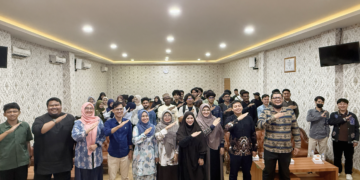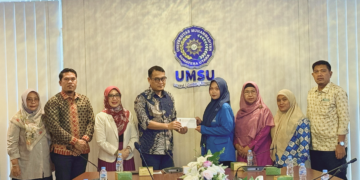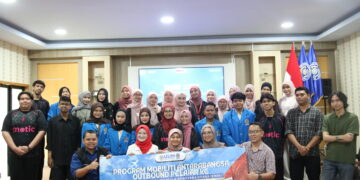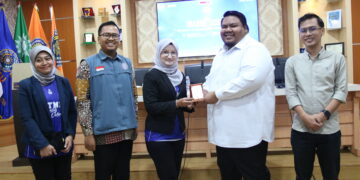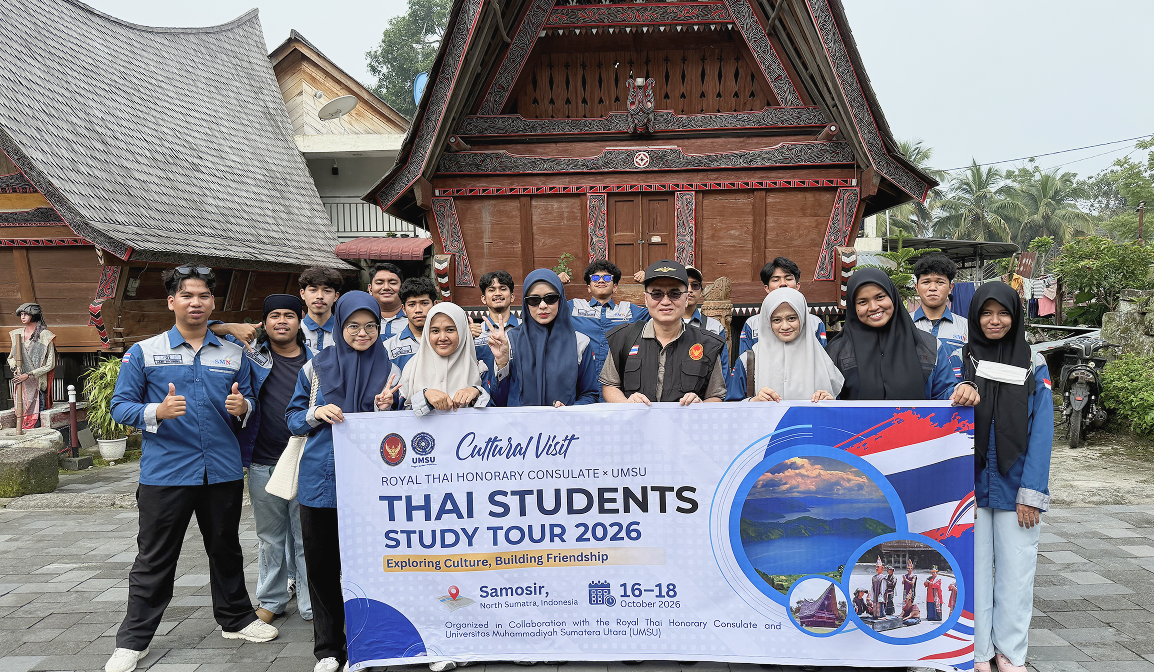
SAMOSIR – Learning about a culture is not always enough through classrooms, books, or presentations alone. With this idea in mind, the Royal Thai Honorary Consulate in collaboration with Universitas Muhammadiyah Sumatera Utara (UMSU) organized the “Cultural Visit Thai Students with Royal Thai Honorary Consulate x UMSU” in Samosir Regency from Friday to Sunday, 16–18 October 2026. The program brought together 16 Thai students studying at UMSU to see, experience, and understand the richness of Batak culture while also exploring the tourism landscape of Samosir.
The activity also involved Eryanto, Secretary of the Royal Thai Honorary Consulate in Medan, and Riswanda Imawan as a representative of UMSU. The cultural visit was designed as a cross-cultural learning experience for Thai students currently pursuing their studies at UMSU. Rather than introducing North Sumatra only through theoretical explanations, the students were encouraged to engage directly with cultural sites, historical narratives, local communities, and the natural environment that form part of Batak identity.
The journey began in Medan, continued to Parapat, and then crossed over to Samosir Island. One of the key stops was Huta Siallagan and the Stone Chairs of Ambarita, where participants learned about historical traces and aspects of Batak community life in the past. The cultural journey continued to Huta Bolon Simanindo Museum, giving the students an opportunity to gain a more tangible understanding of Batak heritage, traditions, historical objects, and representations of traditional community life.
The experience was further enriched through visits to several of Samosir’s natural and tourism destinations, including Bukit Holbung, Sibeabea, Efrata Waterfall, Tele Observation Tower, Pangururan Waterfront City, and Tomok Market. These locations were not treated merely as recreational destinations, but also as observation sites where participants could examine how natural landscapes, culture, tourism, and local economic activities are closely interconnected.
The program adopted an active learning approach through field observation, discussion, and evaluation. On the first evening, the students shared their observations and reflected on the experiences they had gained throughout the day. This approach ensured that the visit went beyond sightseeing and documentation, encouraging participants to process their experiences into new knowledge, perspectives, and cultural understanding.
For the Thai students, Samosir became a kind of “open-air classroom”, helping them understand that Batak culture is not simply a legacy of the past. Tradition, history, nature, communities, and the tourism industry are interconnected and continue to evolve. The experience also introduced them to various forms of cultural and nature-based tourism that could be studied, compared, and potentially adapted as inspiration for tourism development in their home country.
More broadly, the program became part of an effort to strengthen relations between Indonesia and Thailand through education and cultural exchange. The presence of Thai students within Batak cultural spaces created a two-way exchange: international students gained a deeper understanding of Indonesia’s local culture, while Samosir was given an opportunity to introduce its cultural heritage and tourism potential to a wider international community.
The visit was also designed to have an impact beyond the three-day journey. As a follow-up, participants were encouraged to compile their observations on the historical and cultural values of Huta Siallagan, the preservation of collections at Huta Bolon Simanindo Museum, as well as the tourism potential of natural destinations such as Bukit Holbung and Efrata Waterfall. Their documentation and observations are expected to serve as academic learning materials while also generating simple recommendations related to cultural preservation and sustainable tourism development in Samosir.
In a broader context, the Cultural Visit Thai Students with Royal Thai Honorary Consulate x UMSU also contributes to several Sustainable Development Goals (SDGs), particularly SDG 4: Quality Education, SDG 8: Decent Work and Economic Growth, SDG 11: Sustainable Cities and Communities, and SDG 17: Partnerships for the Goals. The program provides students with learning experiences beyond the campus, strengthens cross-cultural understanding, introduces the importance of cultural heritage preservation, and creates opportunities for international partnerships. In the context of Indonesia’s higher education Key Performance Indicators, the activity is particularly relevant to IKU 2 – Students Gain Experience Outside the Campus, and may also contribute to IKU 6 – Study Programs Collaborate with World-Class Partners if further developed within a formal framework of international institutional cooperation.
Ultimately, the three days in Samosir were more than a journey from one destination to another. For the 16 Thai students, the visit became a direct encounter with stories, places, traditions, and communities that they may previously have known only as part of Indonesia on a map. From the historic Stone Chairs of Huta Siallagan to the sweeping landscapes of Bukit Holbung, Samosir offered a meaningful reminder that the strongest forms of cultural exchange often begin not with lengthy explanations, but simply by being present, observing, and experiencing a culture firsthand.